> ## Documentation Index
> Fetch the complete documentation index at: https://docs.retellai.com/llms.txt
> Use this file to discover all available pages before exploring further.
# Secure the webhook
> Verify Retell webhook authenticity using the x-retell-signature header and your API key — with SDK helpers, code samples, and IP addresses to allowlist.
You can use the x-retell-signature header together with your Retell API Key to verify the webhook comes from Retell AI, not from a malicious third party. We have provided a verify function in our SDKs to help you with this.
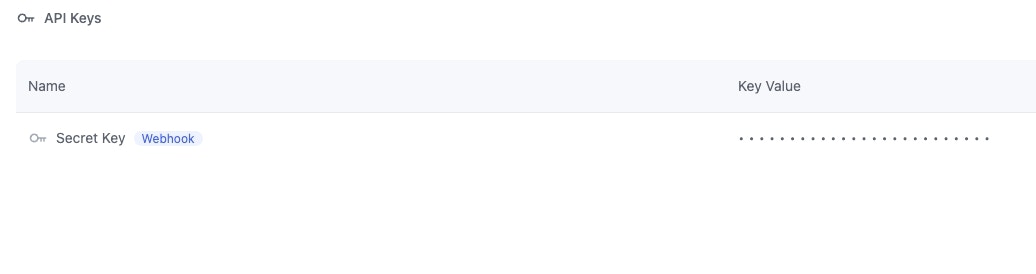 Only the API key that has a webhook badge next to it can be used to verify the webhook.
You can also check and allowlist Retell IP addresses: `100.20.5.228`.
The following code snippets demonstrate how to verify and handle the webhook in Node.js and Python.
### Install the SDK
Install the corresponding Python or Node.js SDK:
* [Node.js](https://docs.retellai.com/get-started/sdk)
* [Python](https://docs.retellai.com/get-started/sdk)
### Sample Code
```typescript Node.js theme={null}
// install the sdk: https://docs.retellai.com/get-started/sdk
import { Retell } from "retell-sdk";
import express from "express";
const app = express();
// Use raw body for signature verification, not JSON.stringify(req.body).
app.use(express.raw({ type: "application/json" }));
app.post("/webhook", (req, res) => {
const rawBody = req.body.toString("utf-8");
if (
!Retell.verify(
rawBody,
process.env.RETELL_API_KEY,
req.headers["x-retell-signature"],
)
) {
console.error("Invalid signature");
return;
}
const {event, call} = JSON.parse(rawBody);
// process the webhook
// Acknowledge the receipt of the event
res.status(204).send();
});
```
```Python Python theme={null}
# Install the SDK: https://docs.retellai.com/get-started/sdk
from fastapi import FastAPI, Request
from fastapi.responses import JSONResponse
from retell import Retell
retell = Retell(api_key=os.environ["RETELL_API_KEY"])
@app.post("/webhook")
async def handle_webhook(request: Request):
try:
# Use raw body for signature verification, not json.dumps(request.json()).
raw_body = (await request.body()).decode("utf-8")
valid_signature = retell.verify(
raw_body,
api_key=str(os.environ["RETELL_API_KEY"]),
signature=str(request.headers.get("X-Retell-Signature")),
)
if not valid_signature:
print("Received Unauthorized")
return JSONResponse(status_code=401, content={"message": "Unauthorized"})
post_data = json.loads(raw_body)
# process the webhook
return JSONResponse(status_code=204)
except Exception as err:
print(f"Error in webhook: {err}")
return JSONResponse(
status_code=500, content={"message": "Internal Server Error"}
)
```
## Verify Without SDK
If you're using a language without an official Retell SDK, you can verify the webhook signature manually. The signature uses HMAC-SHA256.
### How the Signature Works
Every webhook request includes an `X-Retell-Signature` header in the format:
```
v={timestamp},d={hex_digest}
```
* `v` is the Unix timestamp in milliseconds when the webhook was sent.
* `d` is the HMAC-SHA256 hex digest of the raw request body concatenated with the timestamp.
### Verification Steps
1. Extract the `X-Retell-Signature` header from the request.
2. Parse the timestamp (`v`) and digest (`d`) from the header using the pattern `v=(\d+),d=(.*)`.
3. Check that the timestamp is within **5 minutes** of the current time (to prevent replay attacks).
4. Compute `HMAC-SHA256(raw_body + timestamp, api_key)` where `+` is string concatenation.
5. Compare the computed hex digest with the `d` value from the header. If they match, the webhook is authentic.
You must use the **raw request body** string for verification, not a re-serialized version from parsed JSON. Re-serializing may change whitespace or key ordering, which will cause verification to fail.
### Sample Code
```go Go theme={null}
package main
import (
"crypto/hmac"
"crypto/sha256"
"encoding/hex"
"fmt"
"io"
"math"
"net/http"
"os"
"regexp"
"strconv"
"time"
)
func verifyWebhook(rawBody string, apiKey string, signature string) bool {
re := regexp.MustCompile(`v=(\d+),d=(.*)`)
matches := re.FindStringSubmatch(signature)
if len(matches) != 3 {
return false
}
timestamp, err := strconv.ParseInt(matches[1], 10, 64)
if err != nil {
return false
}
digest := matches[2]
// Check timestamp is within 5 minutes
now := time.Now().UnixMilli()
if math.Abs(float64(now-timestamp)) > 5*60*1000 {
return false
}
// Compute HMAC-SHA256 and use constant-time comparison
mac := hmac.New(sha256.New, []byte(apiKey))
mac.Write([]byte(rawBody + matches[1]))
expectedMAC, _ := hex.DecodeString(digest)
return hmac.Equal(mac.Sum(nil), expectedMAC)
}
func webhookHandler(w http.ResponseWriter, r *http.Request) {
body, _ := io.ReadAll(r.Body)
rawBody := string(body)
signature := r.Header.Get("X-Retell-Signature")
if !verifyWebhook(rawBody, os.Getenv("RETELL_API_KEY"), signature) {
http.Error(w, "Unauthorized", http.StatusUnauthorized)
return
}
// Process the webhook
fmt.Println("Webhook verified successfully")
w.WriteHeader(http.StatusNoContent)
}
func main() {
http.HandleFunc("/webhook", webhookHandler)
http.ListenAndServe(":8080", nil)
}
```
```ruby Ruby theme={null}
require "openssl"
require "sinatra"
require "json"
API_KEY = ENV["RETELL_API_KEY"]
def verify_webhook(raw_body, api_key, signature)
match = signature.match(/v=(\d+),d=(.*)/)
return false unless match
timestamp = match[1]
digest = match[2]
# Check timestamp is within 5 minutes
now = (Time.now.to_f * 1000).to_i
return false if (now - timestamp.to_i).abs > 5 * 60 * 1000
# Compute HMAC-SHA256 and use constant-time comparison
expected = OpenSSL::HMAC.hexdigest("SHA256", api_key, raw_body + timestamp)
OpenSSL.secure_compare(expected, digest)
end
post "/webhook" do
raw_body = request.body.read
signature = request.env["HTTP_X_RETELL_SIGNATURE"]
unless verify_webhook(raw_body, API_KEY, signature)
halt 401, "Unauthorized"
end
# Process the webhook
status 204
end
```
```php PHP theme={null}
5 * 60 * 1000) {
return false;
}
// Compute HMAC-SHA256 and use constant-time comparison
$expected = hash_hmac("sha256", $rawBody . $timestamp, $apiKey);
return hash_equals($expected, $digest);
}
if (!verifyWebhook($rawBody, $apiKey, $signature)) {
http_response_code(401);
echo "Unauthorized";
exit;
}
// Process the webhook
$data = json_decode($rawBody, true);
http_response_code(204);
?>
```
Only the API key that has a webhook badge next to it can be used to verify the webhook.
You can also check and allowlist Retell IP addresses: `100.20.5.228`.
The following code snippets demonstrate how to verify and handle the webhook in Node.js and Python.
### Install the SDK
Install the corresponding Python or Node.js SDK:
* [Node.js](https://docs.retellai.com/get-started/sdk)
* [Python](https://docs.retellai.com/get-started/sdk)
### Sample Code
```typescript Node.js theme={null}
// install the sdk: https://docs.retellai.com/get-started/sdk
import { Retell } from "retell-sdk";
import express from "express";
const app = express();
// Use raw body for signature verification, not JSON.stringify(req.body).
app.use(express.raw({ type: "application/json" }));
app.post("/webhook", (req, res) => {
const rawBody = req.body.toString("utf-8");
if (
!Retell.verify(
rawBody,
process.env.RETELL_API_KEY,
req.headers["x-retell-signature"],
)
) {
console.error("Invalid signature");
return;
}
const {event, call} = JSON.parse(rawBody);
// process the webhook
// Acknowledge the receipt of the event
res.status(204).send();
});
```
```Python Python theme={null}
# Install the SDK: https://docs.retellai.com/get-started/sdk
from fastapi import FastAPI, Request
from fastapi.responses import JSONResponse
from retell import Retell
retell = Retell(api_key=os.environ["RETELL_API_KEY"])
@app.post("/webhook")
async def handle_webhook(request: Request):
try:
# Use raw body for signature verification, not json.dumps(request.json()).
raw_body = (await request.body()).decode("utf-8")
valid_signature = retell.verify(
raw_body,
api_key=str(os.environ["RETELL_API_KEY"]),
signature=str(request.headers.get("X-Retell-Signature")),
)
if not valid_signature:
print("Received Unauthorized")
return JSONResponse(status_code=401, content={"message": "Unauthorized"})
post_data = json.loads(raw_body)
# process the webhook
return JSONResponse(status_code=204)
except Exception as err:
print(f"Error in webhook: {err}")
return JSONResponse(
status_code=500, content={"message": "Internal Server Error"}
)
```
## Verify Without SDK
If you're using a language without an official Retell SDK, you can verify the webhook signature manually. The signature uses HMAC-SHA256.
### How the Signature Works
Every webhook request includes an `X-Retell-Signature` header in the format:
```
v={timestamp},d={hex_digest}
```
* `v` is the Unix timestamp in milliseconds when the webhook was sent.
* `d` is the HMAC-SHA256 hex digest of the raw request body concatenated with the timestamp.
### Verification Steps
1. Extract the `X-Retell-Signature` header from the request.
2. Parse the timestamp (`v`) and digest (`d`) from the header using the pattern `v=(\d+),d=(.*)`.
3. Check that the timestamp is within **5 minutes** of the current time (to prevent replay attacks).
4. Compute `HMAC-SHA256(raw_body + timestamp, api_key)` where `+` is string concatenation.
5. Compare the computed hex digest with the `d` value from the header. If they match, the webhook is authentic.
You must use the **raw request body** string for verification, not a re-serialized version from parsed JSON. Re-serializing may change whitespace or key ordering, which will cause verification to fail.
### Sample Code
```go Go theme={null}
package main
import (
"crypto/hmac"
"crypto/sha256"
"encoding/hex"
"fmt"
"io"
"math"
"net/http"
"os"
"regexp"
"strconv"
"time"
)
func verifyWebhook(rawBody string, apiKey string, signature string) bool {
re := regexp.MustCompile(`v=(\d+),d=(.*)`)
matches := re.FindStringSubmatch(signature)
if len(matches) != 3 {
return false
}
timestamp, err := strconv.ParseInt(matches[1], 10, 64)
if err != nil {
return false
}
digest := matches[2]
// Check timestamp is within 5 minutes
now := time.Now().UnixMilli()
if math.Abs(float64(now-timestamp)) > 5*60*1000 {
return false
}
// Compute HMAC-SHA256 and use constant-time comparison
mac := hmac.New(sha256.New, []byte(apiKey))
mac.Write([]byte(rawBody + matches[1]))
expectedMAC, _ := hex.DecodeString(digest)
return hmac.Equal(mac.Sum(nil), expectedMAC)
}
func webhookHandler(w http.ResponseWriter, r *http.Request) {
body, _ := io.ReadAll(r.Body)
rawBody := string(body)
signature := r.Header.Get("X-Retell-Signature")
if !verifyWebhook(rawBody, os.Getenv("RETELL_API_KEY"), signature) {
http.Error(w, "Unauthorized", http.StatusUnauthorized)
return
}
// Process the webhook
fmt.Println("Webhook verified successfully")
w.WriteHeader(http.StatusNoContent)
}
func main() {
http.HandleFunc("/webhook", webhookHandler)
http.ListenAndServe(":8080", nil)
}
```
```ruby Ruby theme={null}
require "openssl"
require "sinatra"
require "json"
API_KEY = ENV["RETELL_API_KEY"]
def verify_webhook(raw_body, api_key, signature)
match = signature.match(/v=(\d+),d=(.*)/)
return false unless match
timestamp = match[1]
digest = match[2]
# Check timestamp is within 5 minutes
now = (Time.now.to_f * 1000).to_i
return false if (now - timestamp.to_i).abs > 5 * 60 * 1000
# Compute HMAC-SHA256 and use constant-time comparison
expected = OpenSSL::HMAC.hexdigest("SHA256", api_key, raw_body + timestamp)
OpenSSL.secure_compare(expected, digest)
end
post "/webhook" do
raw_body = request.body.read
signature = request.env["HTTP_X_RETELL_SIGNATURE"]
unless verify_webhook(raw_body, API_KEY, signature)
halt 401, "Unauthorized"
end
# Process the webhook
status 204
end
```
```php PHP theme={null}
5 * 60 * 1000) {
return false;
}
// Compute HMAC-SHA256 and use constant-time comparison
$expected = hash_hmac("sha256", $rawBody . $timestamp, $apiKey);
return hash_equals($expected, $digest);
}
if (!verifyWebhook($rawBody, $apiKey, $signature)) {
http_response_code(401);
echo "Unauthorized";
exit;
}
// Process the webhook
$data = json_decode($rawBody, true);
http_response_code(204);
?>
```