

-
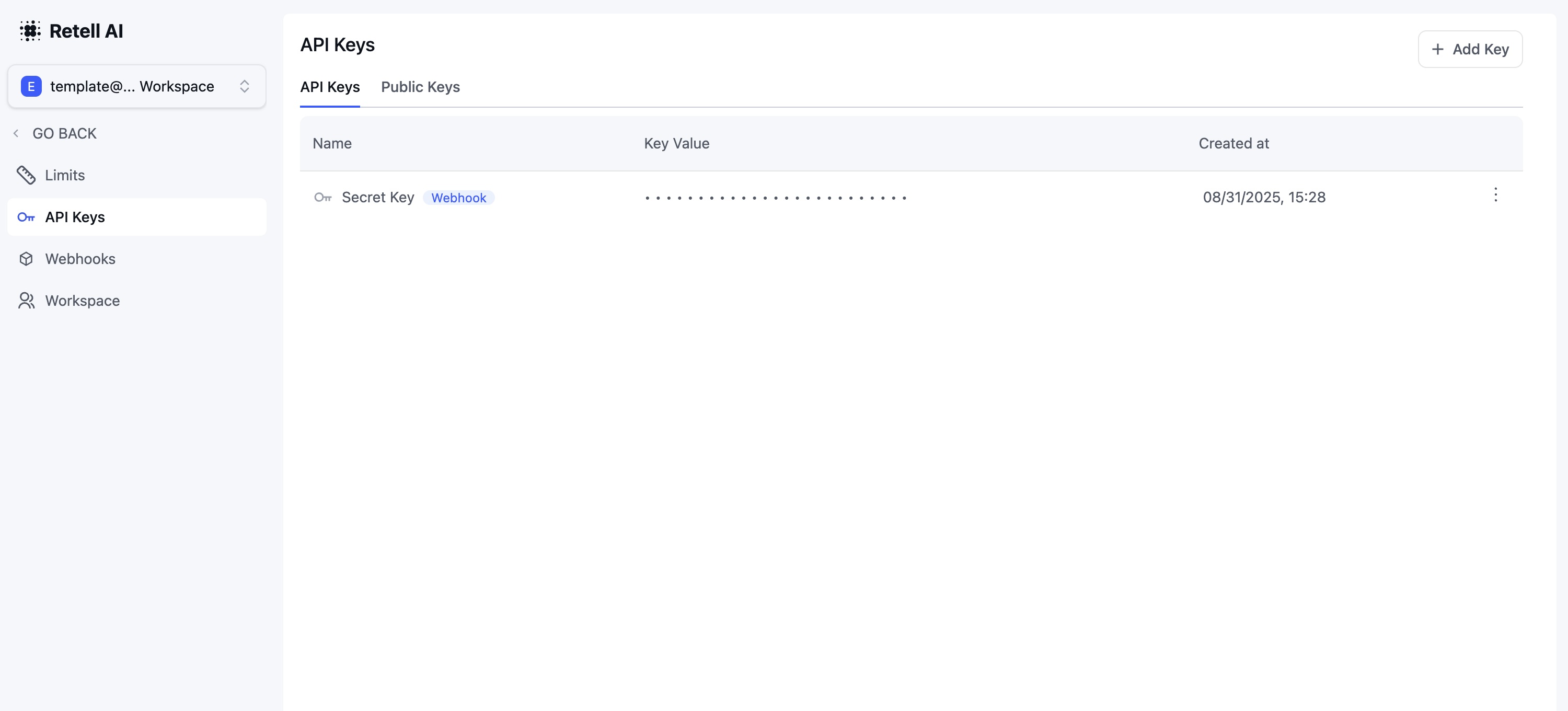
Create a new API key
- Click the “Add” button
- Give your key a descriptive name to identify its purpose
-
Delete an existing API key
- Locate the key you want to remove
- Click the delete (trash) icon
- Confirm the deletion when prompted
-
Set a webhook API key
- Select an existing API key
- Click “Set as Webhook Key” to designate it for webhook authentication
- Only one key can be set as the webhook key at a time
-
Restrict an API key’s permissions
- Enable “Restrict permissions” when creating or editing a key
- Grant each permission group No Access, Read, or Edit
- See Restrict API key permissions for details
Keep your API keys secure and never share them publicly. If a key is compromised, delete it immediately and create a new one.
Restrict API key permissions
By default, an API key has full access to every API endpoint that supports API key authentication. To limit what a key can do, enable Restrict permissions when you create or edit the key, then choose an access level for each permission group. Scoped keys are useful when you share a key with a third party or want to limit it to a single integration. Each group offers up to three access levels:- No Access — the key cannot call any endpoint in this group.
- Read — the key can call read-only endpoints in this group (for example, listing or fetching resources).
- Edit — the key can call both read and write endpoints in this group. Selecting Edit also grants Read access.
Some groups are action-only and have no separate Read level — their Read column shows a dash (–). For those groups you can only choose No Access or Edit.
Permission groups
Restrictions apply only to API requests made with that key, and you can change them anytime by editing the key. A key created without restrictions keeps full access.