

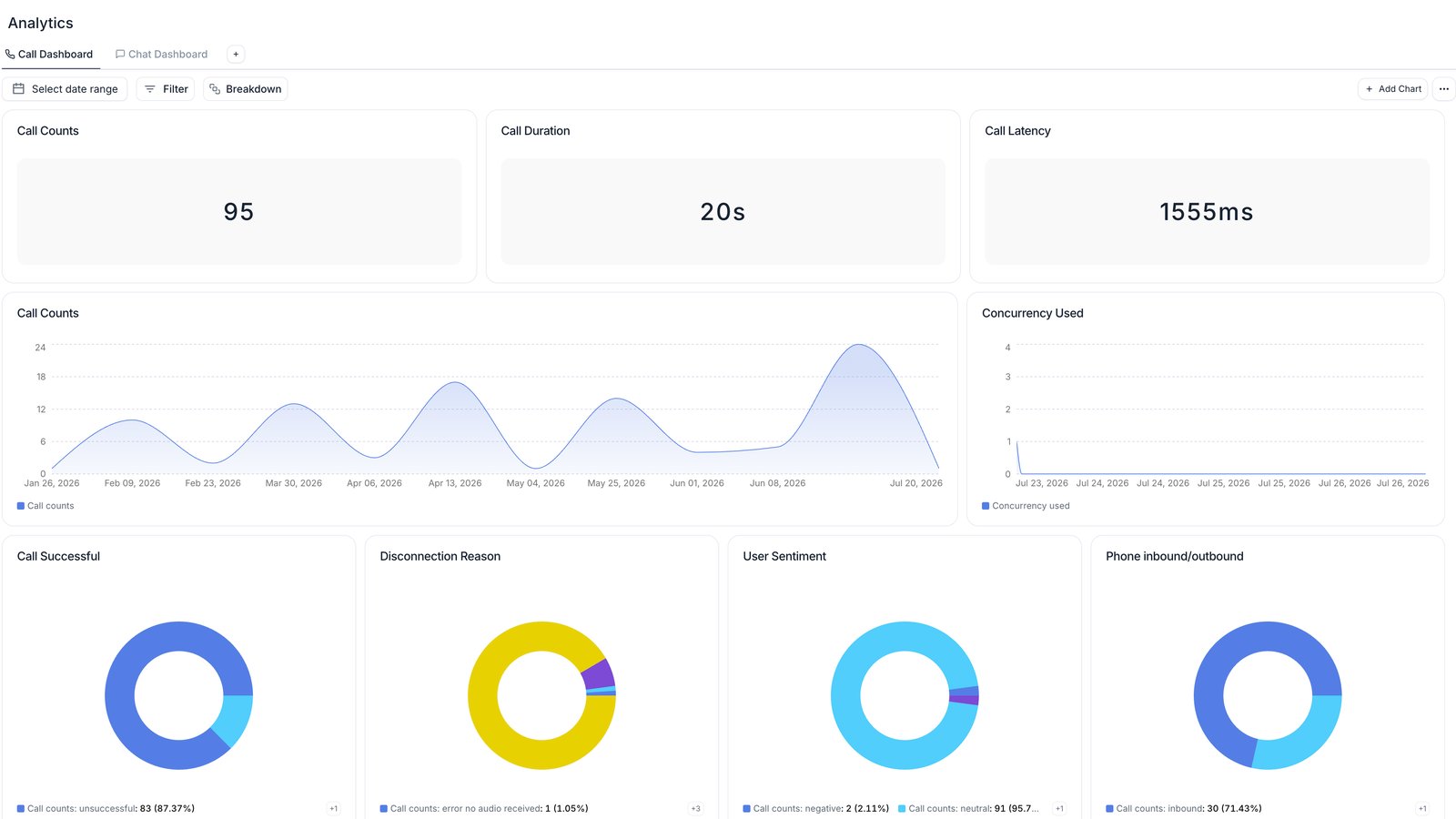
A call dashboard with number, line, and donut charts.
When to use it
Reach for the analytics dashboard when you want to see a pattern across many sessions rather than the detail of one:- Track performance over time. Watch success rate, duration, or latency by day or week and see whether a prompt change moved them.
- Compare agents or versions. Break a metric down by agent or agent version to see which one performs better.
- Watch spend. Chart combined cost by agent or by day to see where your money goes.
- Report on business outcomes. Chart any custom Post Call Extraction field, so “booked appointments” sits next to call volume.
Example
A clinic runs an appointment-reminder agent. They chart Call Successful Rate by day, break it down by agent version, and add a Call Counts chart filtered to thevoicemail_reached disconnection reason. When a new version ships, the two charts show within a day whether more calls are landing in voicemail and whether the success rate followed.
To build or improve a dashboard by describing what you need, use Conductor for analytics dashboards.
Create a dashboard
Each dashboard is scoped to either call data or chat data, and the scope is fixed once you create it. You can keep up to 10 dashboards per workspace; creating an 11th fails with “Dashboard limit reached.”Add the dashboard
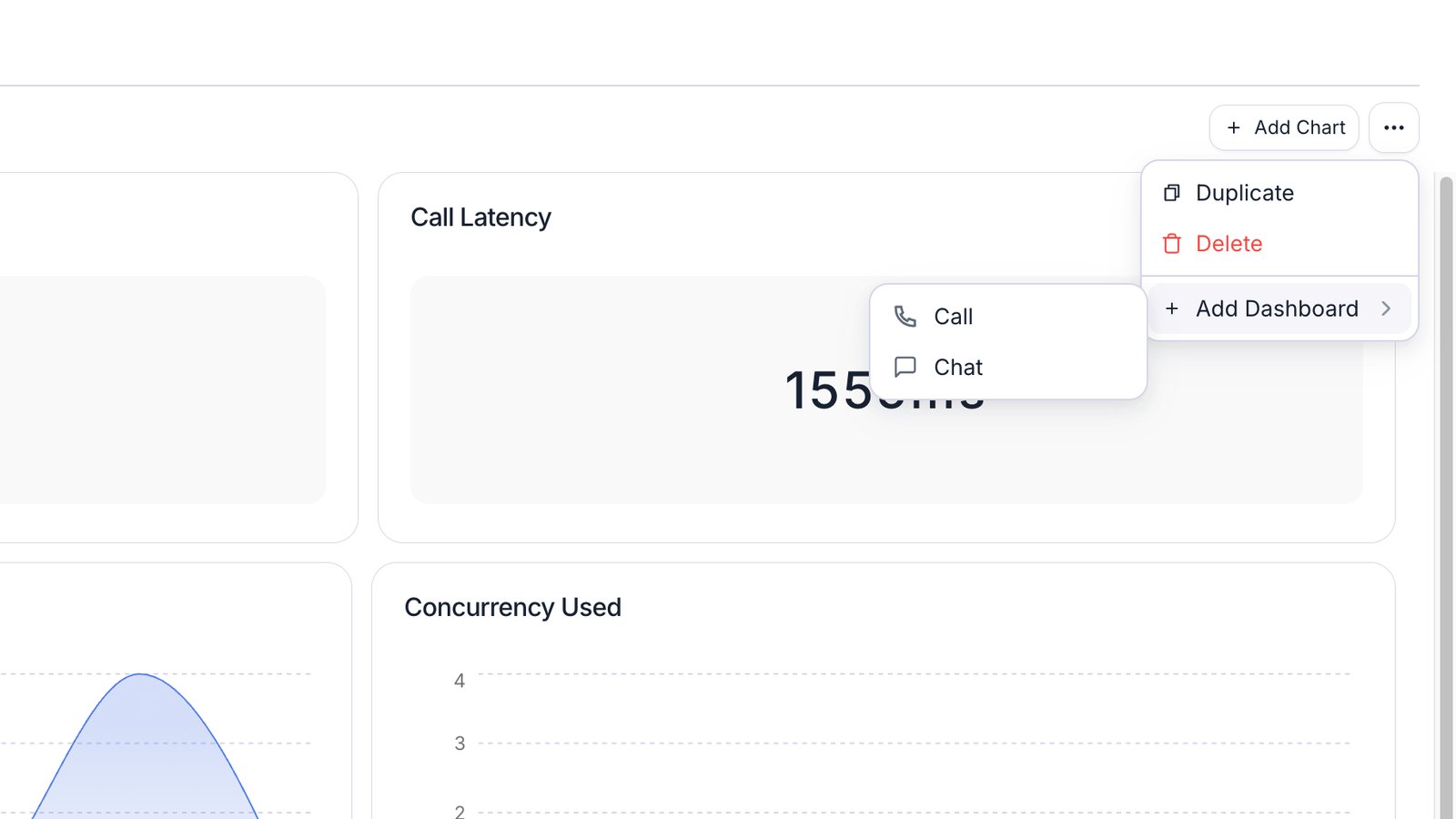
Add Dashboard, where the call or chat scope is set for good.
Name it
Arrange the tabs
Add a chart
Open the chart editor
Choose the graph type
Pick the metric and measurement
Set the time range and grouping
Narrow it (optional)
Save
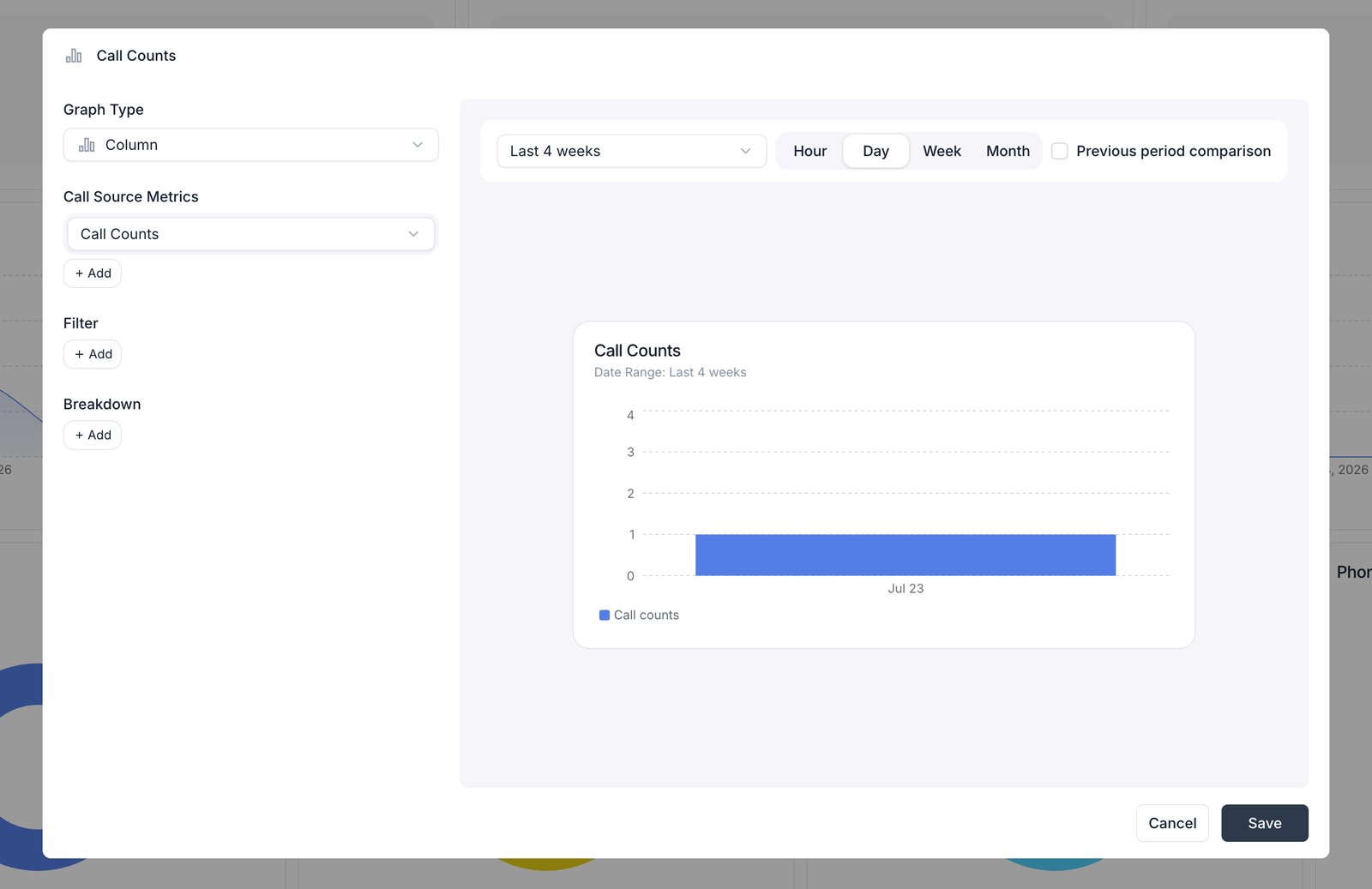
The chart editor, with a live preview of the chart you're building.
Metrics you can chart
Which metrics you get depends on whether the dashboard is scoped to calls or chats.Call metrics
Chat metrics
Set the time range
The date range picker at the top of the page sets the window for every chart that follows the dashboard. Pick a preset (Today, Last 7 days, Last 4 weeks, Last 3 months, Week to date, Month to date, Year to date, All time) or select start and end dates on the calendar, then Apply. Each end of the range carries its own time and timezone, so buckets line up with your working day. Future dates are disabled.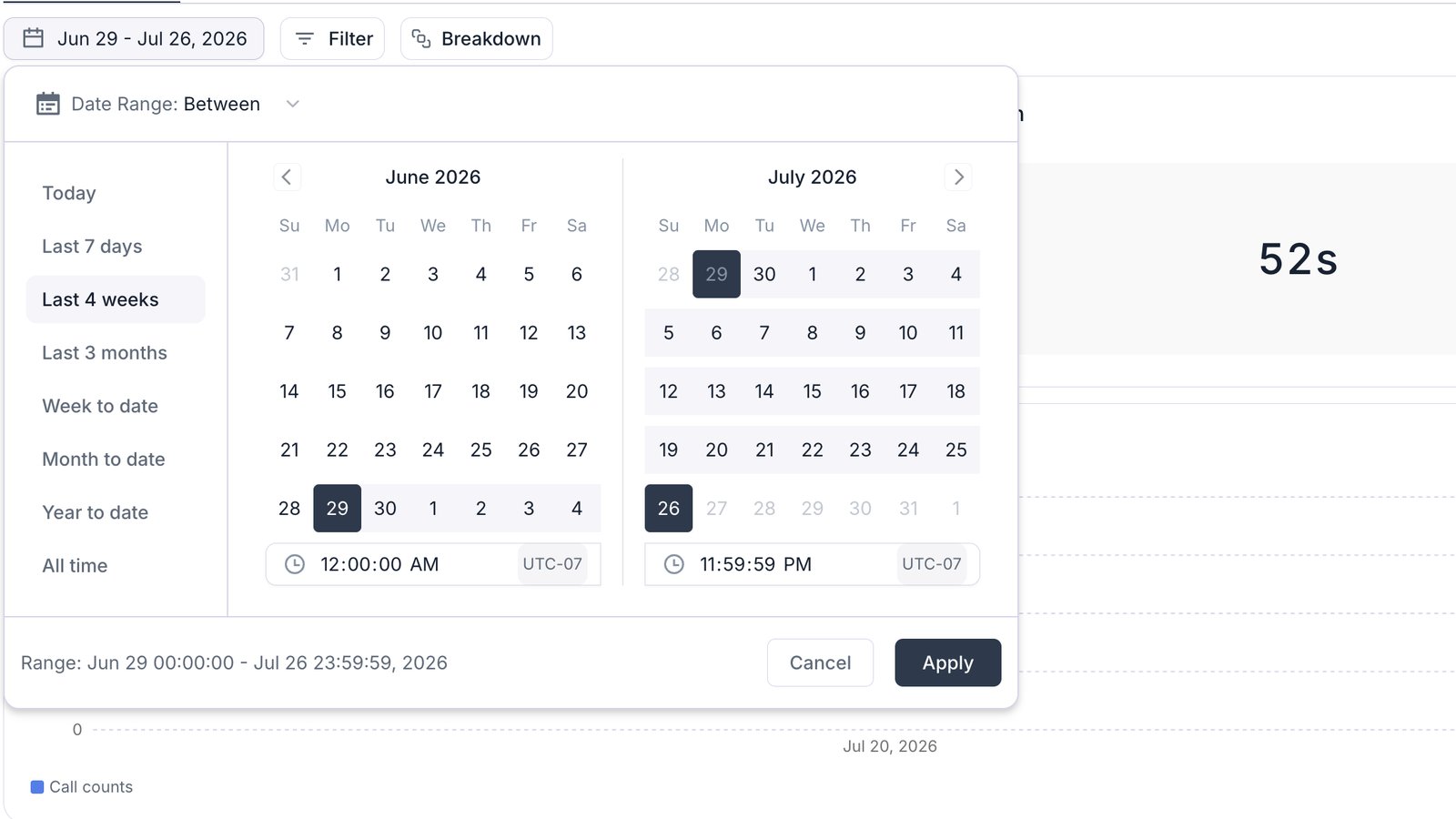
The dashboard date range, with presets, a calendar, and per-end timezones.
Filters and breakdowns
Filters and breakdowns set in the header apply to every chart on the dashboard. Charts can add their own on top. The filter list is split across four tabs. Base holds the built-in fields; Post Call Extraction, Metadata, and Dynamic Variables hold whatever your agents produce. On a call dashboard, Base offers agent, call ID, batch call ID, type, duration, from number, to number, user sentiment, disconnection reason, call status, call successful, end-to-end latency, and combined cost. A chat dashboard offers agent, chat ID, chat status, chat successful, combined cost, and user sentiment.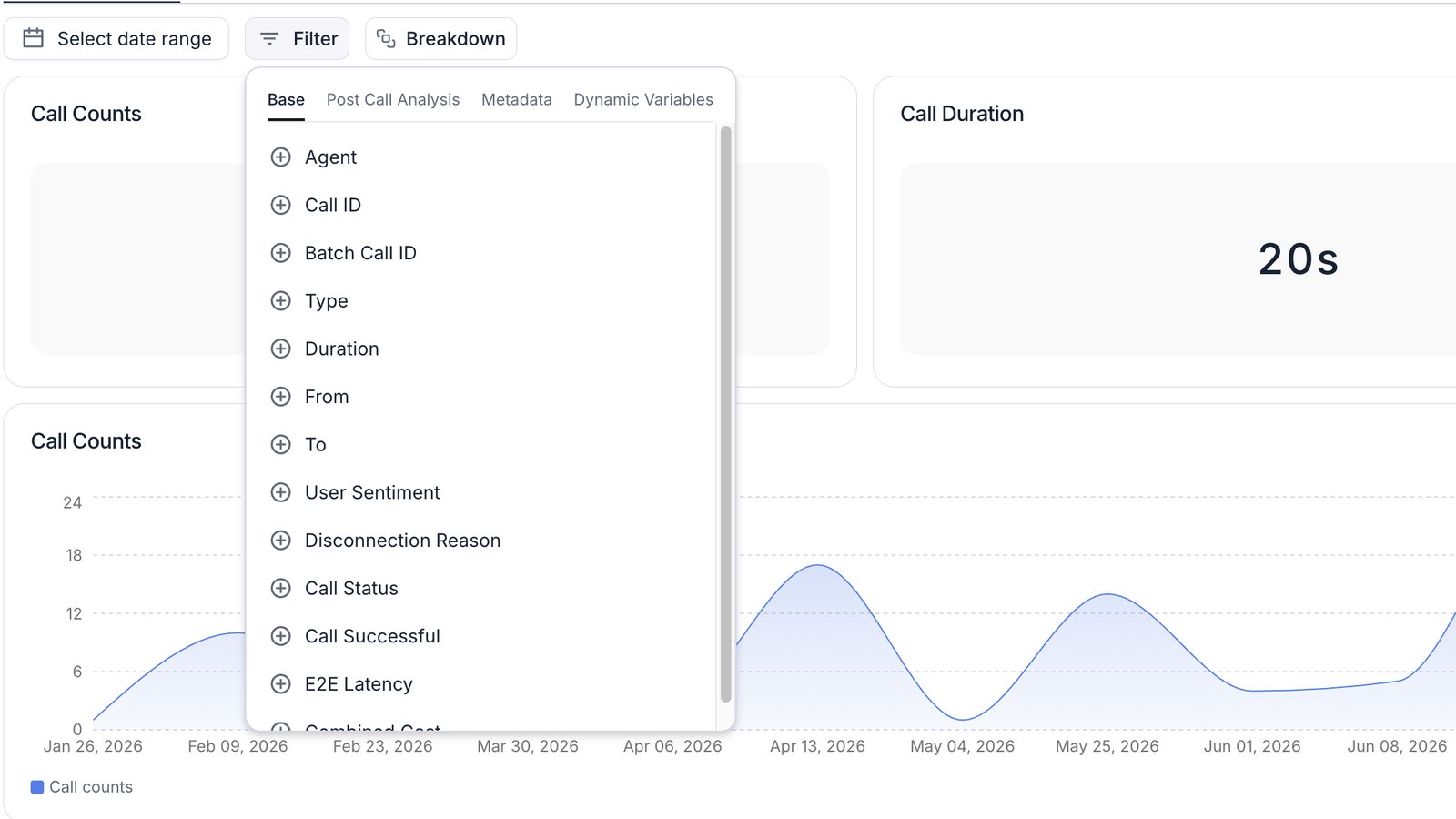
Filters, grouped into base fields and everything your agents produce.
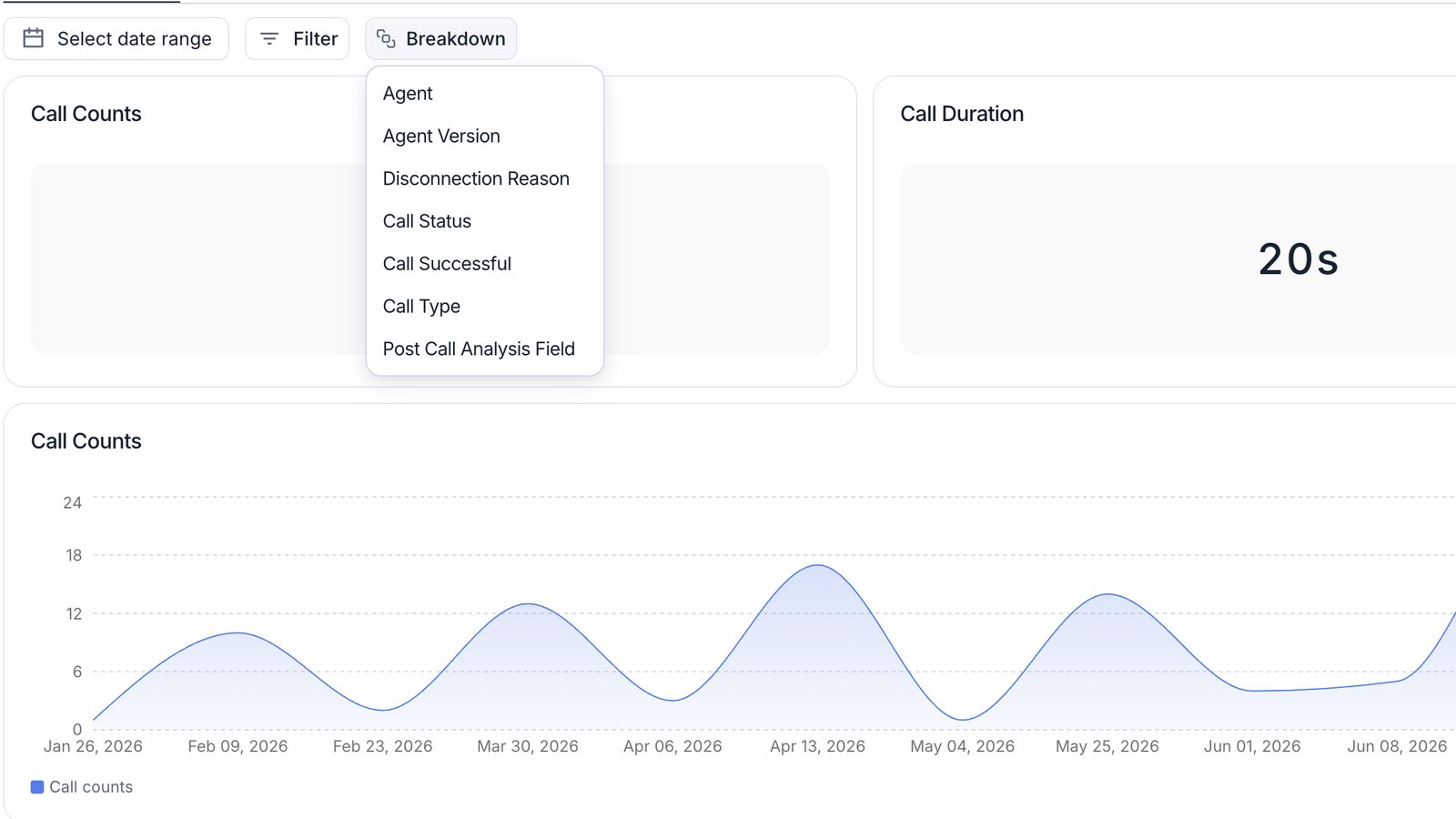
Breakdowns split each chart by a dimension such as agent or version.
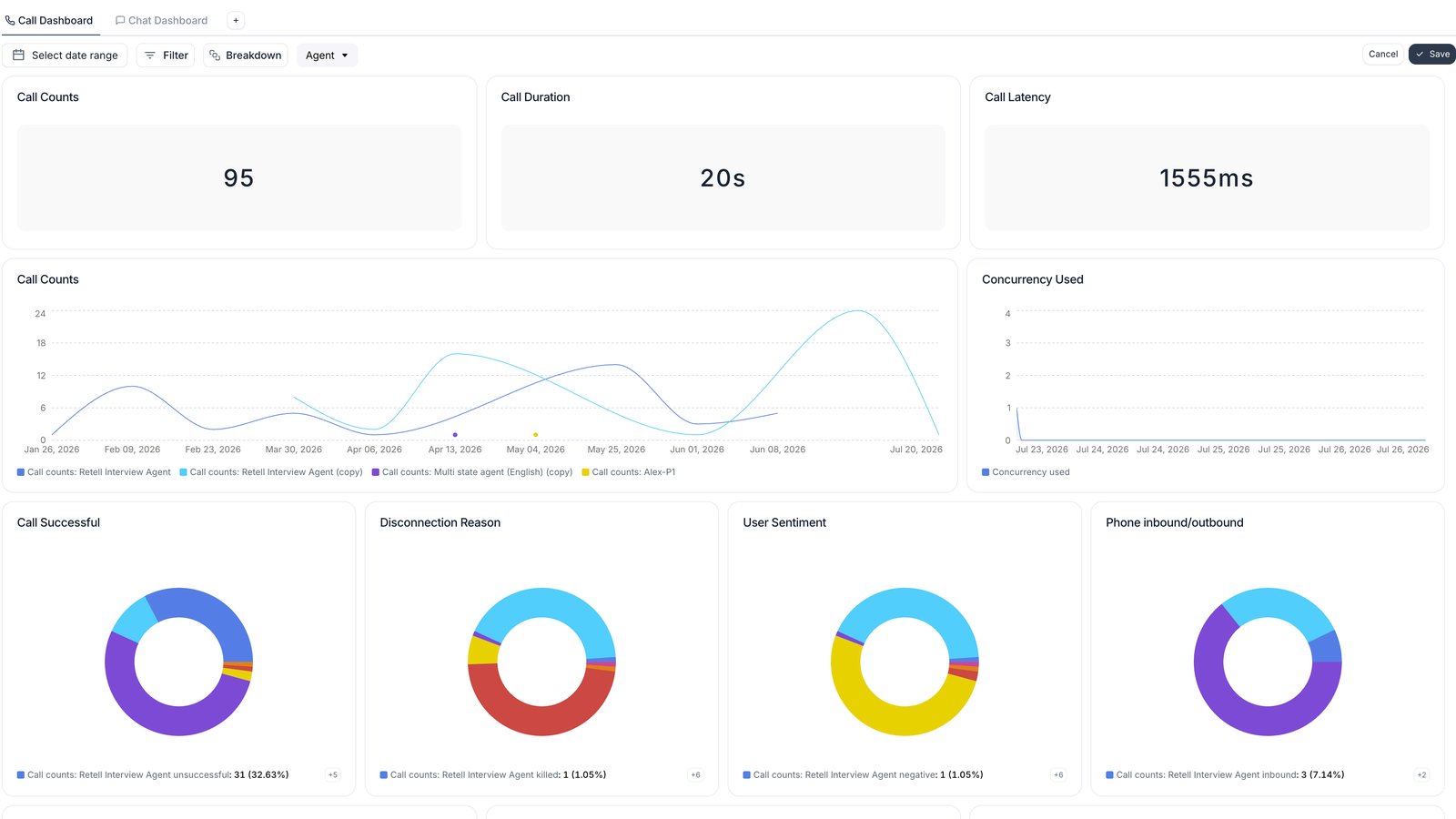
Changing a filter or breakdown puts the header into its unsaved state.
Per-chart filters and breakdowns
Each chart can carry its own filters and up to five breakdowns, set in the chart editor. Chart filters are merged with the dashboard filters rather than replacing them, so both apply. Use them to narrow one chart without touching the rest of the dashboard. Any field from your custom Post Call Extraction can drive a chart, which is how you track business-specific outcomes next to the standard metrics.Chart types and layout
Five chart types are available: column for comparing categories, bar for the same comparison horizontally, line for trends over time, donut for proportions, and number for a single figure. Arrange charts directly on the dashboard, without opening the editor:- Drag a chart to move it within a row or into another row. A row holds up to five charts.
- Drag the divider between two charts to change their widths.
- Drag the handle at the bottom of a row to change its height.
- Drag a chart into empty space to start a new row.
Who can use it
Viewing and editing are separate permissions. With view access you can read dashboards and adjust filters for your own session; without edit access, the Add Chart and Save controls don’t appear. See Access Control for how roles map to permissions.FAQ
How fresh is the data?
How fresh is the data?
Why does my chart say there are too many data points?
Why does my chart say there are too many data points?
How do I find the calls behind a chart?
How do I find the calls behind a chart?
Do chart filters override the dashboard filters?
Do chart filters override the dashboard filters?
Can one dashboard show both calls and chats?
Can one dashboard show both calls and chats?
Is there an API for dashboards?
Is there an API for dashboards?