

When to use call and chat history
Use these pages to:- Investigate an unsuccessful or disconnected session.
- Review a recording, transcript, post-session analysis, or call logs.
- Compare sessions for an agent or agent version.
- Find sessions that match analysis fields, metadata, dynamic variables, or custom attributes.
- Export a filtered set of calls or chats for offline analysis.
Browse and filter sessions
Both pages show one row per session with its time, cost, session ID, status, sentiment, phone numbers, and agent details. Call History also includes call-specific columns such as duration, channel type, direction, end reason, outcome, and end-to-end latency.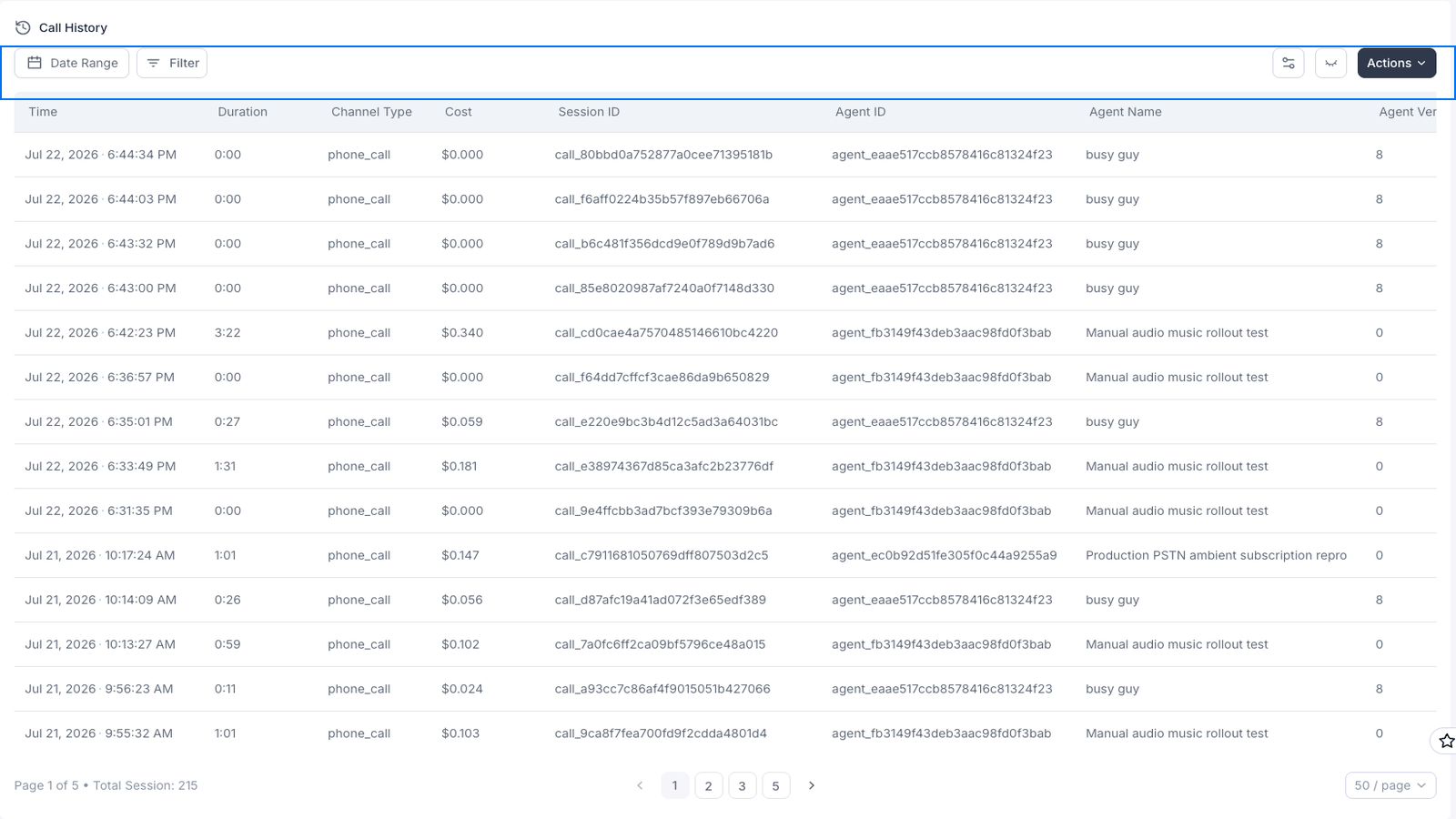
Call History controls and session table.
- Call History supports agent and version, session ID, batch call ID, transfer agent, call type, direction, duration, phone number, status, outcome, sentiment, disconnection reason, end-to-end latency, cost, analysis fields, custom attributes, dynamic variables, and metadata.
- Chat History supports agent and version, session ID, status, outcome, sentiment, disconnection reason, analysis fields, and custom attributes.
ongoing, ended, or error. An ongoing chat becomes ended when the agent or user ends it, when you call the End Chat API, or when the inactivity timeout expires. Calls also include pre-connection statuses such as registered and not_connected.
Filters persist for each workspace in your browser and appear in the URL, so you can bookmark or share a filtered view with another workspace member. Use Customize View to show, hide, and reorder built-in columns, custom analysis fields, and workspace custom attributes. The table shows 50 rows by default, with options for 10, 20, 50, or 100 rows per page.
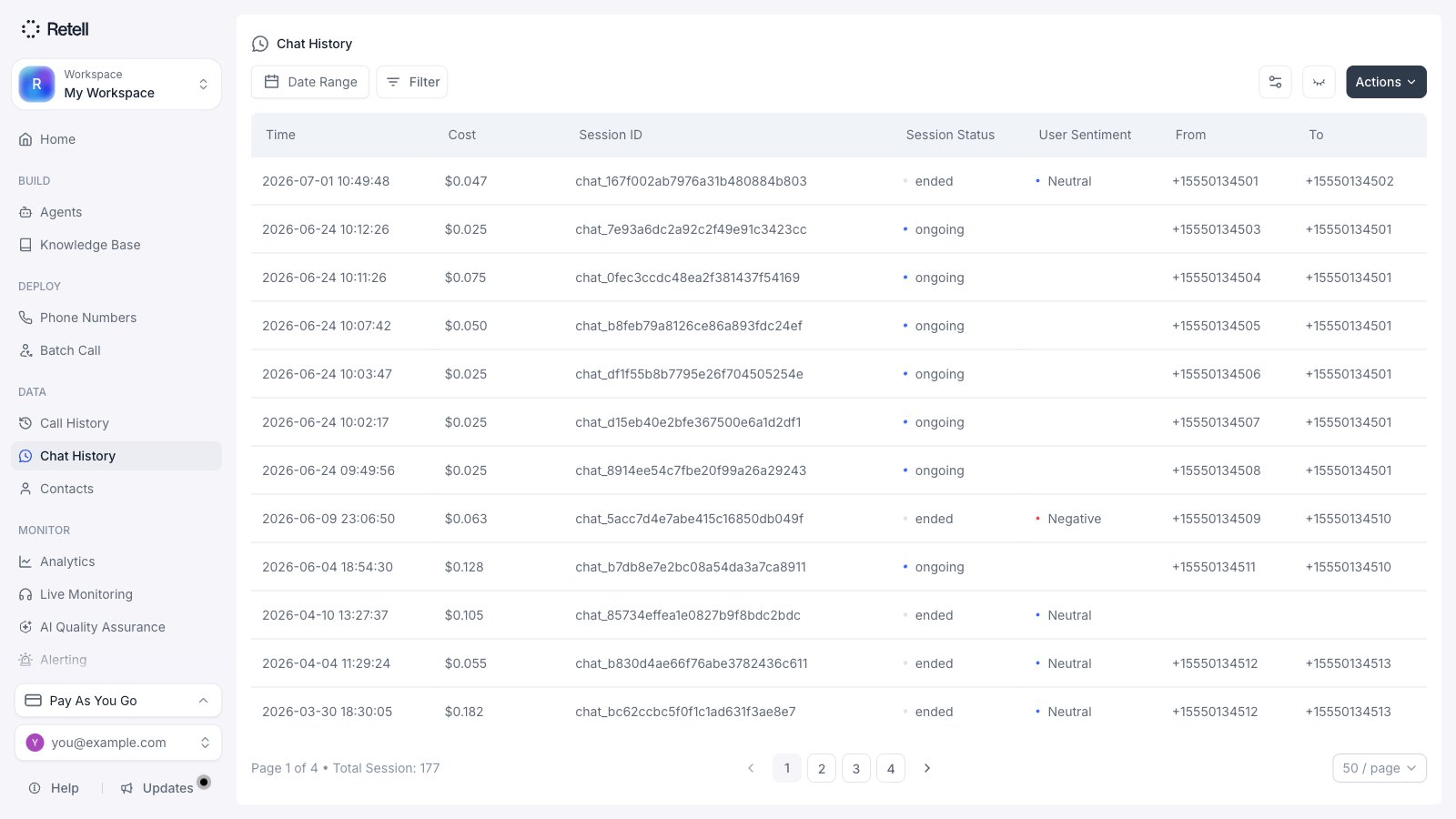
Chat History with session filters and view controls.
Inspect a session
Select a row to open its details. Use the arrows at the top of the panel to move through sessions without closing it. Every session can include:- Conversation Analysis: session outcome, status, user sentiment, disconnection reason, and custom analysis fields.
- Summary: the generated session summary.
- Transcription: messages, tool calls and results, state or node transitions, in-call SMS, and knowledge base retrievals. You can copy the transcript or open the conversation in the test playground.
- Data: provided, overridden, and extracted dynamic variables, plus metadata.
- Contact information: the matching contact, their read-only Conversation Memory, and previous conversations. Use View all to expand a long memory. To edit or clear it, open the contact in Contacts. Phone calls and SMS chats can update this memory for agents to use in later conversations; see contact memory.
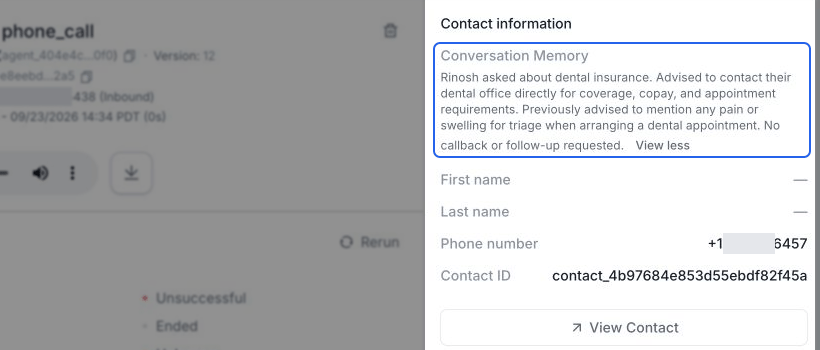
Read the contact's current memory alongside call details. View Contact opens the record in Contacts.
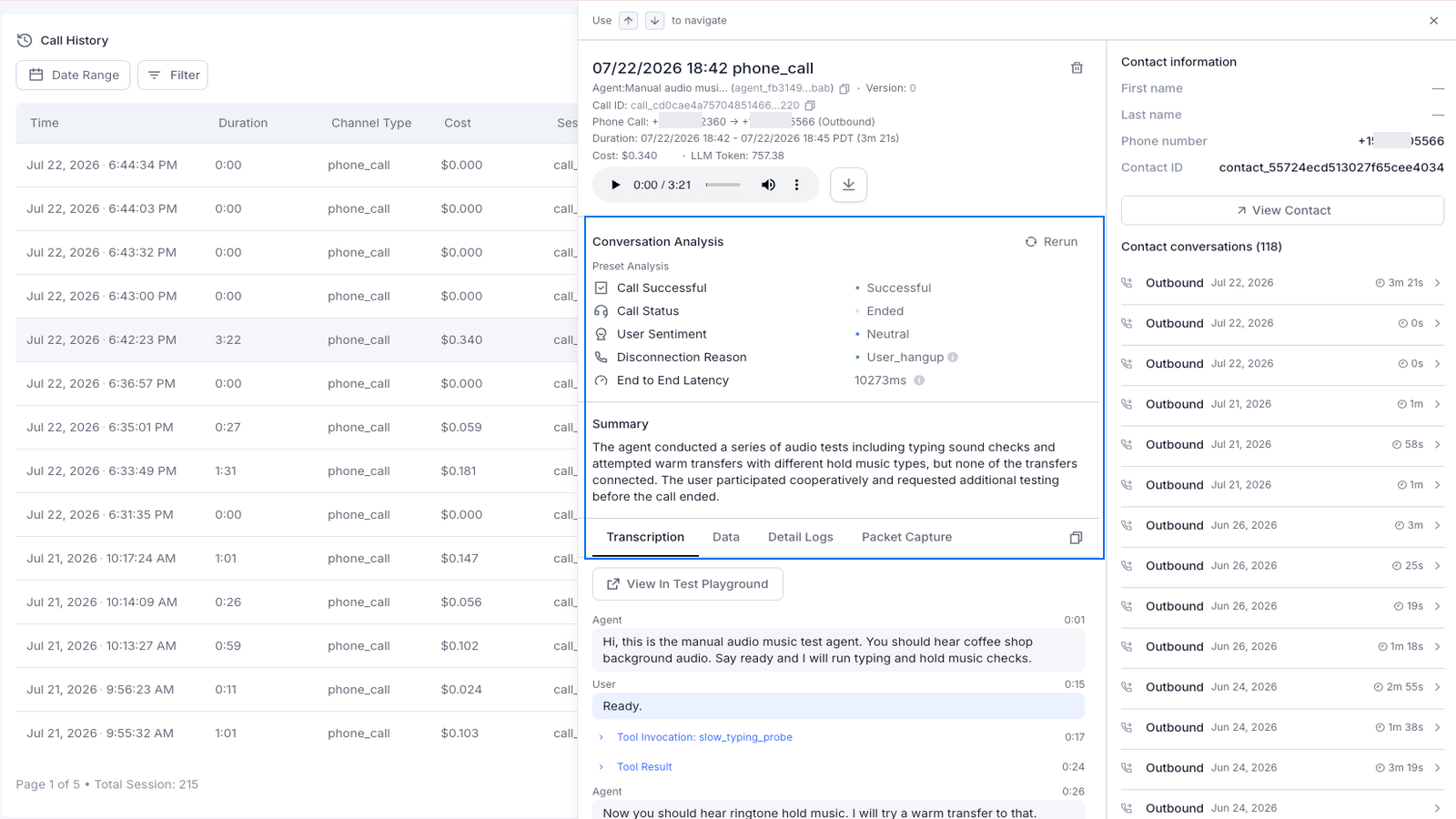
Call details with analysis and transcript tabs.
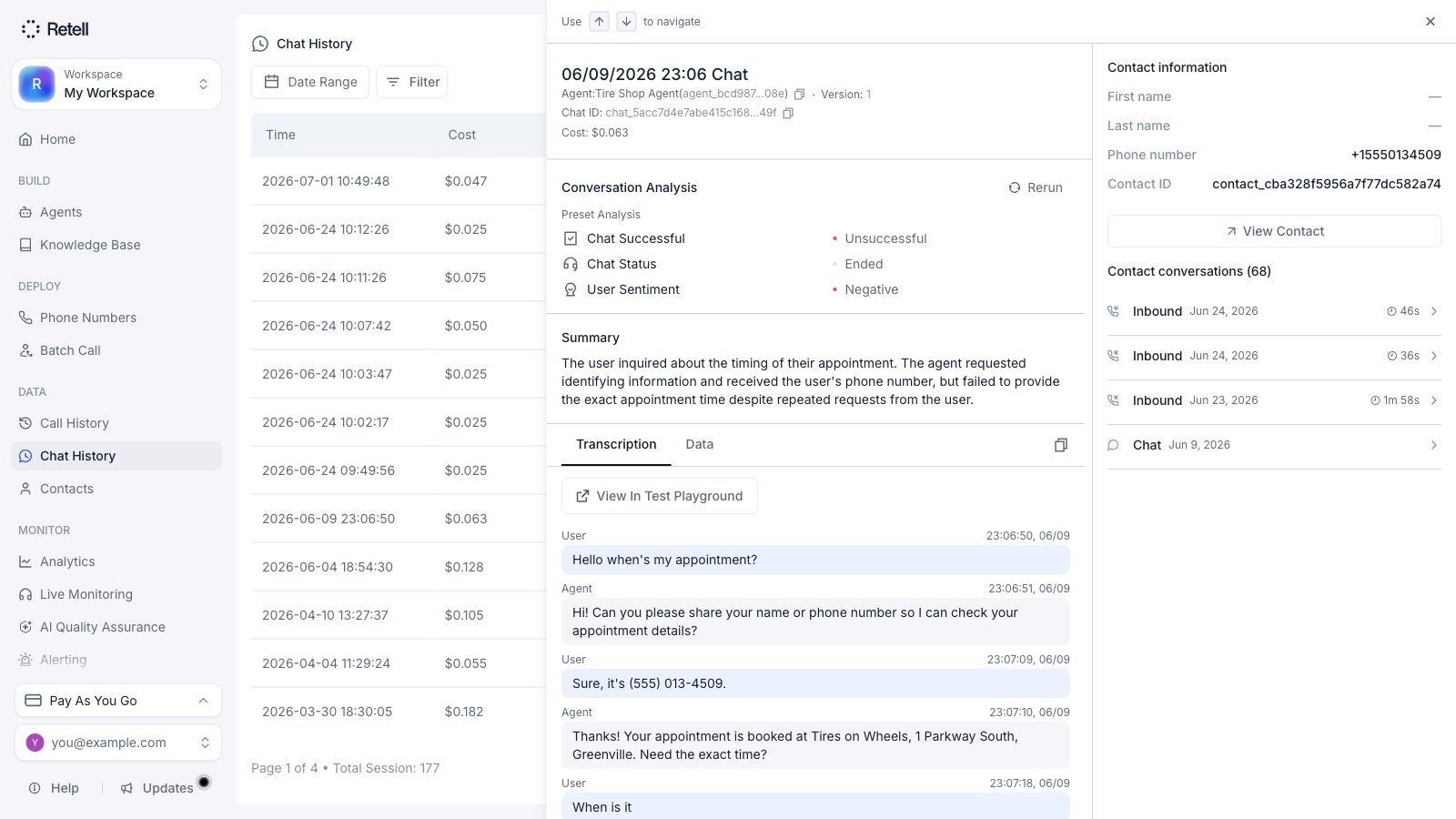
Chat details with analysis, summary, transcript, and contact history.
Rerun analysis
Select Rerun in Conversation Analysis to re-extract analysis fields for one session after changing the agent’s analysis configuration. Rerunning incurs the analysis cost again and does not resend webhooks. To rerun analysis for many sessions, filter Call History or Chat History, then open Actions and choose Backfill from Post-Call Data or Backfill from Chat Data. The backfill uses the latest draft agent configuration and the active filters. You can also rerun analysis through the Rerun Call Analysis API or Rerun Chat Analysis API. See rerun Post Call and Post Chat Extraction for filtering, transfer-agent behavior, and billing details.Export sessions to CSV
Exporting uses the active filters, so narrow the history table before creating the export.1
Choose the export fields
Open Actions, select Export, and choose the columns to include. Export-only fields include transcript data and PII-scrubbed transcripts. Call exports can also include recording and public log URLs.
2
Submit the export
Submit the request. Retell generates the CSV in the background. If the request exceeds your workspace’s export limit, narrow the filters and try again.
3
Download the CSV
Open Actions → Export records to check the request status and download the completed file.
Control sensitive data
When PII scrubbing is enabled, the table and detail panel show scrubbed content by default. Members with permission to view raw data can use Show PII to reveal the original version. The setting applies wherever scrubbed copies are available, including transcripts, recordings, analysis, logs, dynamic variables, and metadata. Authorized members can open the trash menu in a call’s detail panel to:- Remove Sensitive Data, which permanently removes sensitive call artifacts while keeping basic call attributes.
- Delete, which permanently removes the call and its associated data.
FAQ
How long are calls, chats, and recordings stored?
How long are calls, chats, and recordings stored?
By default, Retell stores session data without automatic deletion. You can set a per-agent data retention period to delete data after 1–730 days. All session history is also permanently deleted if you delete your account.
Why is a recording, transcript, or log missing?
Why is a recording, transcript, or log missing?
These artifacts become available after the session ends. They can also be unavailable because the call never connected, the agent stores only basic attributes, a retention period expired, sensitive data was removed, or your role cannot view the data.Review the agent’s data storage settings and ask a workspace admin to confirm your role.
Why does a chat still show as ongoing?
Why does a chat still show as ongoing?
A chat stays
ongoing until the agent or user ends it, you call the End Chat API, or the agent’s inactivity timeout expires. Long-running rows usually indicate a longer timeout.What format are call recordings in?
What format are call recordings in?
Retell stores call recordings as WAV audio. A call can include a mixed single-channel recording, a recording with each party on a separate channel, and PII-scrubbed versions when configured.Use the Get Call API to retrieve the available recording fields.
Can I retrieve call and chat history through the API?
Can I retrieve call and chat history through the API?
Yes. Use the List Calls API to filter and paginate calls, then the Get Call API for one call’s complete details. Use List Chats and Get Chat for chats.